

Written By: Gloria Tsang, RD
Title: Founding Dietitian
Alumni: University of British Columbia
Last Updated on:

You’ve probably heard a lot about how good for you whole grains can be. But do you really know how much you should eat? And what options do you have?
A grain is considered “whole” when all three parts are present.
Most people know that fruits and vegetables contain beneficial phytochemicals and antioxidants, but many do not realize that whole grains are often an even better source of these key nutrients. In fact, whole grains are a good source of B vitamins, vitamin E, magnesium, iron and fiber, as well as other valuable antioxidants not found in some fruits and vegetables. Most of these antioxidants and vitamins are found in the germ and the bran of a grain, not endosperm.
Table of Contents
Whole grains have been shown to reduce the risk of developing heart disease by lowering cholesterol levels, blood pressure, and blood coagulation. They have also been found to reduce the risks of many types of cancer. They may also help regulate blood glucose in people with diabetes. Other studies have also shown that people who consume more whole grains consistently weigh less than those who consumed less.
Since 2005, the US government has been advocating eating more whole grains in our diet. The Dietary Guidelines for Americans 2005 was the first official guideline that clearly recommended a specific daily serving for whole grains. Since then, it has been recommended that all adults eat half their grains as whole grains – that’s at least 3 servings a day.
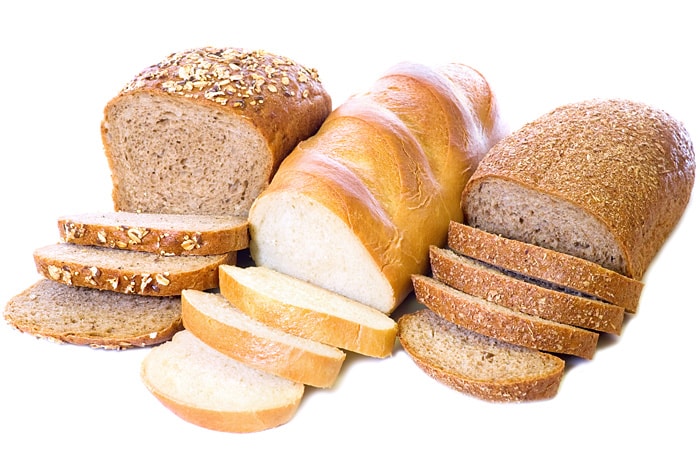
An easy way to increase whole grain intake is to replace some of your refined-grain products with whole grain products. For instance,
Read labels carefully! Foods labelled with the words “multi-grain,” “stone-ground,” “100% wheat,” “cracked wheat,” “seven-grain,” or “bran” are usually not whole-grain products. Color is also not an indication of a whole grain. Brown does not necessary mean whole wheat or whole grain! Some brown bread has brown coloring added to achieve the brown color!
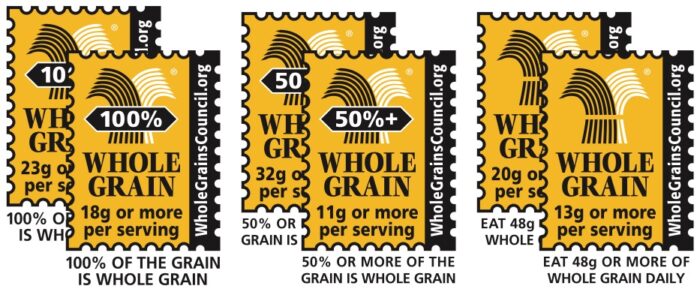
When determining if a packaged food product contains whole grain or not, look for the word “whole” in the ingredient list. Also look for the Whole Grain Stamps. A “100%” stamp means all grains in the product are whole, while a “50%” stamp contains half.
Alumni: University of British Columbia – Gloria Tsang is the author of 6 books and the founder of HealthCastle.com, the largest online nutrition network run by dietitians. Her work has appeared in major national publications, and she is a regularly featured nutrition expert for media outlets across the country. The Huffington Post named her one of its Top 20 Nutrition Experts on Twitter. Gloria’s articles have appeared on various media such as Reuters, NBC & ABC affiliates, The Chicago Sun-Times, Reader’s Digest Canada, iVillage and USA Today.
one serving of whole grain, recommended servings, whole grains, whole grains list
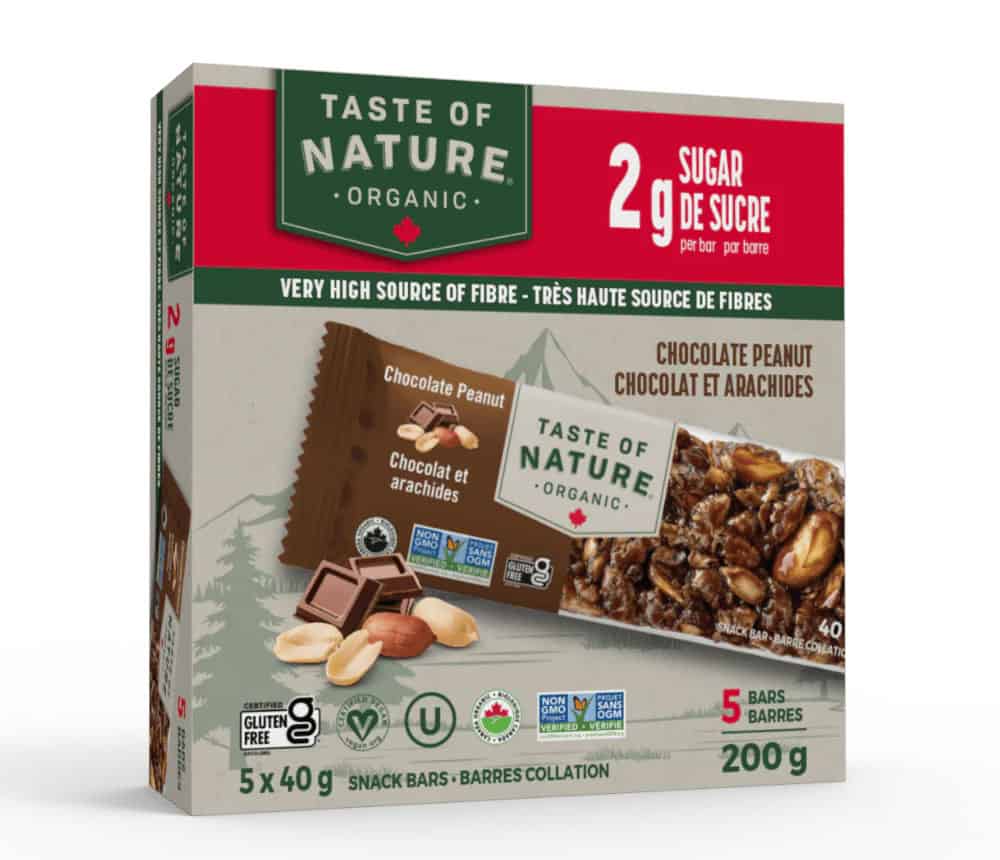
6 Snack Bars With High Protein and Fiber, Dietitian-Approved (2024 Update)
Like our content? Download our free shopping guide and the first chapter of the GoUndiet Book Now!


HealthCastle Nutrition Inc. · © Copyright 1997-2026 · All rights reserved


Thanks for a clear and concise write up. I’ve sent it on to friends. I appreciate your work and insights.
So helpful. Thanks