
Written By: Gloria Tsang, RD
Title: Founding Dietitian
Alumni: University of British Columbia
Last Updated on:

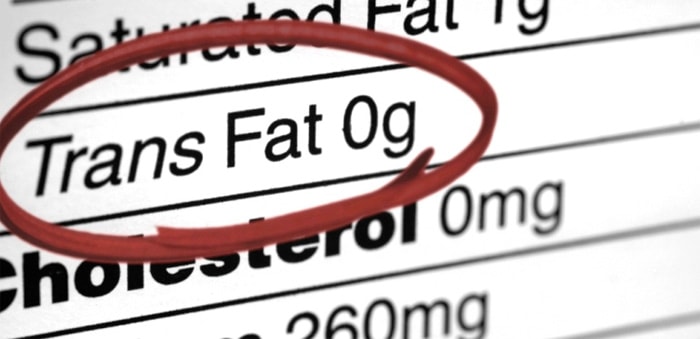
You may feel like you hear something about trans fat, or read something about it in the news, almost every day. It’s true that trans fat is getting a lot of attention as more and more efforts are made to reduce trans fat levels in the foods we eat, or to ban it entirely. So what is it about trans fat that makes it subject to so much attention, why should you worry about whether it’s in your food, and how can you avoid it until it is (inevitably, it seems) banned from food?
Table of Contents
Before we can talk about what trans fat is, we need to talk about how it ended up in our food products in the first place.
Before 80s, many products used to be made with lard, palm oil, and butter, all of which are animal fats high in saturated fat. When researchers found that saturated fat increases LDL (bad) cholesterol and may increase the chance of heart disease, a major transition began – manufacturers started to use vegetable oils to produce their food products.
Unfortunately, liquid vegetable oils are not stable to heat and can go rancid easily. To combat these challenges, scientists came up with the process of “hydrogenating” liquid oils, which makes them more stable during food production and gives them a longer shelf life.
The problem is that hydrogenation creates trans fatty acids – and trans fatty acids, like saturated fat, raise LDL cholesterol, lower HDL (good) cholesterol, and therefore increase the risk of heart disease. Some studies have also shown that a diet high in trans fat may be linked to a greater risk of Type 2 diabetes.
Trans fat is found in many foods, especially commercially packaged and highly processed foods like microwave popcorn, frozen pastry and pizza crusts, and frozen French fries. It is also found in fried foods from some fast food chains, like French fries and chicken nuggets, although many restaurants have switched to oils that do not contain trans fats.
Note: Trans fat is naturally found in animal products. This fat is not hydrogenated and is generally the good kind of trans fat.
Efforts have been made to limit trans fats in food for almost 10 years.
In April 2004, the FDA Food Advisory Committee voted to recommend that trans fatty acid intake be reduced to “less than 1% of energy (2 g per day of a 2000 kcal diet).”
In January 2006, it became mandatory to list trans fat content on the Nutrition Facts panels of all packaged food products. However, under FDA guidelines, foods with up to 0.49 g trans fat per serving can still be labeled as having zero trans fat. So keep in mind that any food that lists partially hydrogenated vegetable oils, hydrogenated vegetable oils, or shortening most likely contains trans fat – even if the Nutrition Facts panel lists zero trans fat.
In July 2008, New York City became the first city to ban trans fats in its restaurants.
Most recently, in November 2013, the FDA announced it has made a preliminary determination that partially hydrogenated oils, as the primary source of artificial trans fats in processed foods, are not “generally recognized as safe.” If this determination is finalized, partially hydrogenated oils will no longer be allowed in foods without authorization. So, it seems trans fats may finally be on the way out.
It seems clear that the move towards removing trans fats is well underway. In the meantime, be sure to check both the Nutrition Facts panel and the ingredients list of all packaged foods to get a sense of the trans fat content of the foods you buy.
Alumni: University of British Columbia – Gloria Tsang is the author of 6 books and the founder of HealthCastle.com, the largest online nutrition network run by dietitians. Her work has appeared in major national publications, and she is a regularly featured nutrition expert for media outlets across the country. The Huffington Post named her one of its Top 20 Nutrition Experts on Twitter. Gloria’s articles have appeared on various media such as Reuters, NBC & ABC affiliates, The Chicago Sun-Times, Reader’s Digest Canada, iVillage and USA Today.
cholesterol, heart smart, hydrogenated oil, nutritional labels, partially hydrogenated oil, trans fat
Like our content? Download our free shopping guide and the first chapter of the GoUndiet Book Now!

HealthCastle Nutrition Inc. · © Copyright 1997-2026 · All rights reserved