
Written By: Gloria Tsang, RD
Title: Founding Dietitian
Alumni: University of British Columbia
Last Updated on:

When we eat carbohydrates (including starch and sugars), they are digested and converted into glucose, a simple sugar, in our bodies. Glucose is then absorbed and therefore enters into the blood stream, providing energy for our daily activities. Glycemic Index is a standardized system of ranking foods based on their effect on blood glucose levels over 2 – 3 hours, compared to a reference food. Foods that are digested and absorbed faster, will have a higher glycemic index. In other words, higher GI foods increase blood sugar higher and faster, compared to foods with lower GI.
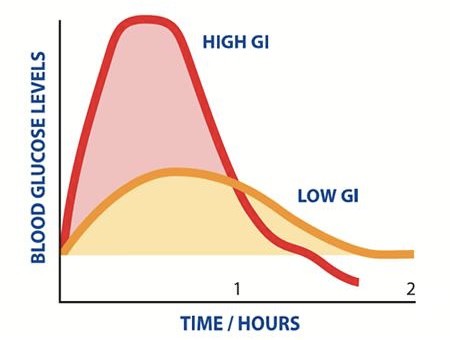
This GI food-ranking approach, which originated in Canada in the 80s, is popular in Australia and has been gaining ground around the world since 2000s.
Table of Contents
Glycemic index uses glucose as the reference food; it has a GI value of 100. All other foods are measured and ranked as below:
Glycemic Index Range:
A number of factors determine a food’s glycemic index value. One of the most important is how highly processed the carbohydrates are. Whole-grain foods tend to have a lower glycemic index than their refined products. For example, white rice, which its bran and germ have been removed, has a higher glycemic index than brown rice, which is less processed.
The glycemic index was originally developed to help people with diabetes choose foods that would not cause big spike in blood glucose levels. Eating more low GI foods can prevent blood sugar swings, and can help feel longer as they are usually higher in fiber and protein. However, we cannot rely solely on it to judge a food or a diet on its effectives on weight loss. Chocolate, for instance, has a lower GI value than watermelon. That doesn’t make chocolate more healthy than watermelon.
Studies have show that a low-GI diet helps control blood sugar in people with diabetes. Indeed, a 2014 review study showed that low GI foods may offer anti-inflammatory benefits.
A Cochrane review published in January 2009 reviewed 11 randomized controlled trials. Researchers found that following a low glycemic index diet helps people with type 1 and type 2 diabetes to improve their blood sugar control significantly. In particularly, glycated hemoglobin A1C (sometimes referred as Hg A1C or A1C)) decreased by 0.5% with low glycemic index diet, which is both statistically and clinically significant.
To look up the GI value of a specific food, go to this Glycemic Index database by University of Sydney.
Alumni: University of British Columbia – Gloria Tsang is the author of 6 books and the founder of HealthCastle.com, the largest online nutrition network run by dietitians. Her work has appeared in major national publications, and she is a regularly featured nutrition expert for media outlets across the country. The Huffington Post named her one of its Top 20 Nutrition Experts on Twitter. Gloria’s articles have appeared on various media such as Reuters, NBC & ABC affiliates, The Chicago Sun-Times, Reader’s Digest Canada, iVillage and USA Today.
Beat the Winter Chills with A Steaming Bowl of Healthy Soup
Which Salt to Choose? Check out These 4 Salts and Their Characteristics

Like our content? Download our free shopping guide and the first chapter of the GoUndiet Book Now!


HealthCastle Nutrition Inc. · © Copyright 1997-2026 · All rights reserved